%20--%3e%3cpath%20d='M128%2056%20L144%20128%20L128%20116%20L112%20128%20Z'%20fill='%23d39b4a'/%3e%3c!--%20Compass%20needle%20-%20South%20(white)%20--%3e%3cpath%20d='M128%20200%20L144%20128%20L128%20140%20L112%20128%20Z'%20fill='%23ffffff'%20opacity='0.85'/%3e%3c!--%20Center%20circle%20--%3e%3ccircle%20cx='128'%20cy='128'%20r='12'%20fill='%23d39b4a'/%3e%3ccircle%20cx='128'%20cy='128'%20r='6'%20fill='%230f4f52'/%3e%3c/svg%3e)
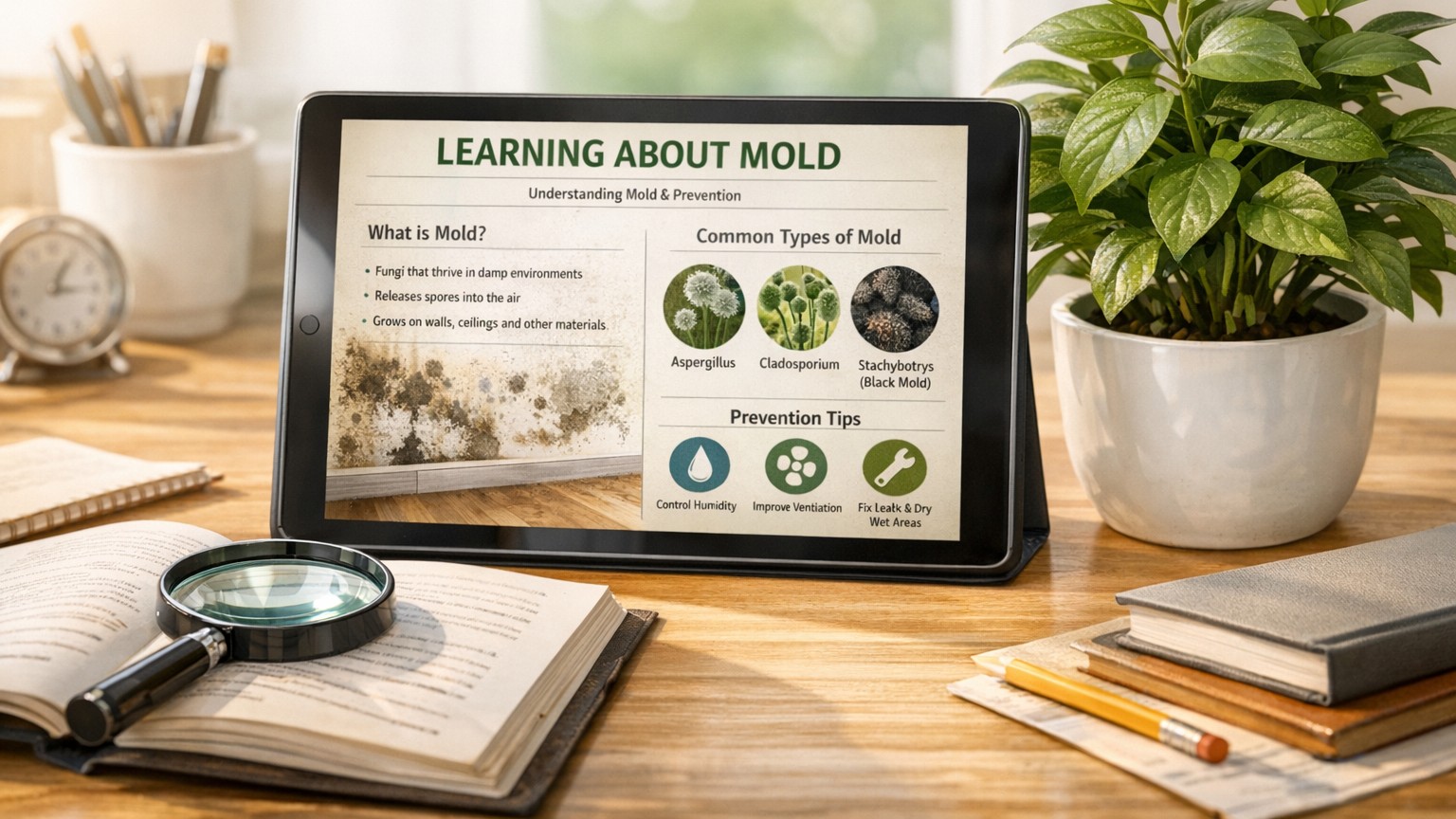
Mold is one of the most common asthma triggers, affecting millions of Americans. If you have asthma and suspect mold in your home, you face a challenging situation: the mold needs to be addressed, but the process itself can trigger symptoms. Here's how to manage both effectively.
Understanding the Mold-Asthma Connection
Mold triggers asthma through multiple mechanisms. Inhaling mold spores causes allergic reactions in sensitized individuals. Mold also produces volatile organic compounds (MVOCs) - the source of that musty odor - which can irritate airways. Some molds produce mycotoxins that may cause additional respiratory irritation.
For people with asthma, even low levels of mold exposure can trigger bronchospasm, increased mucus production, and airway inflammation. Learn more about how mold affects asthma and the scientific research.
Immediate Steps to Reduce Exposure
While addressing the underlying mold problem, take these steps to reduce symptoms:
- Run HEPA air purifiers in bedrooms and main living areas
- Keep windows closed when outdoor mold counts are high
- Use air conditioning and change filters monthly
- Maintain indoor humidity below 50%
- Stay out of rooms with visible mold or musty odors
During Remediation: Protecting Yourself
Professional mold remediation is essential for significant mold problems, but the process disturbs spores. Plan to stay elsewhere during active remediation - especially during demolition and cleaning phases. If you must remain in the home:
- Seal off your living area from work zones
- Increase your rescue inhaler and controller medications as directed by your doctor
- Use a N95 or P100 respirator when near work areas
- Run HEPA purifiers continuously
Ensure your remediation contractor uses proper containment and negative air pressure to prevent spore spread. Learn about containment requirements in professional remediation.
Post-Remediation: Verifying Results
Before returning to normal activities, get independent post-remediation verification. Air sampling should show spore counts similar to outdoor levels and no elevated levels of the mold species found during the original assessment. For asthma sufferers, this verification is especially important.
Long-Term Prevention
Once remediation is complete, prevent recurrence by:
- Fixing all moisture sources (leaks, condensation, humidity)
- Using exhaust fans in bathrooms and kitchens
- Monitoring humidity with a hygrometer
- Cleaning regularly with HEPA vacuums
- Inspecting high-risk areas periodically (basements, bathrooms, under sinks)
When to See Your Doctor
If your asthma worsens despite these measures, consult your pulmonologist or allergist. They may recommend allergy testing for specific mold species, adjustments to your controller medications, or evaluation for conditions like Allergic Bronchopulmonary Aspergillosis (ABPA) in severe cases.